
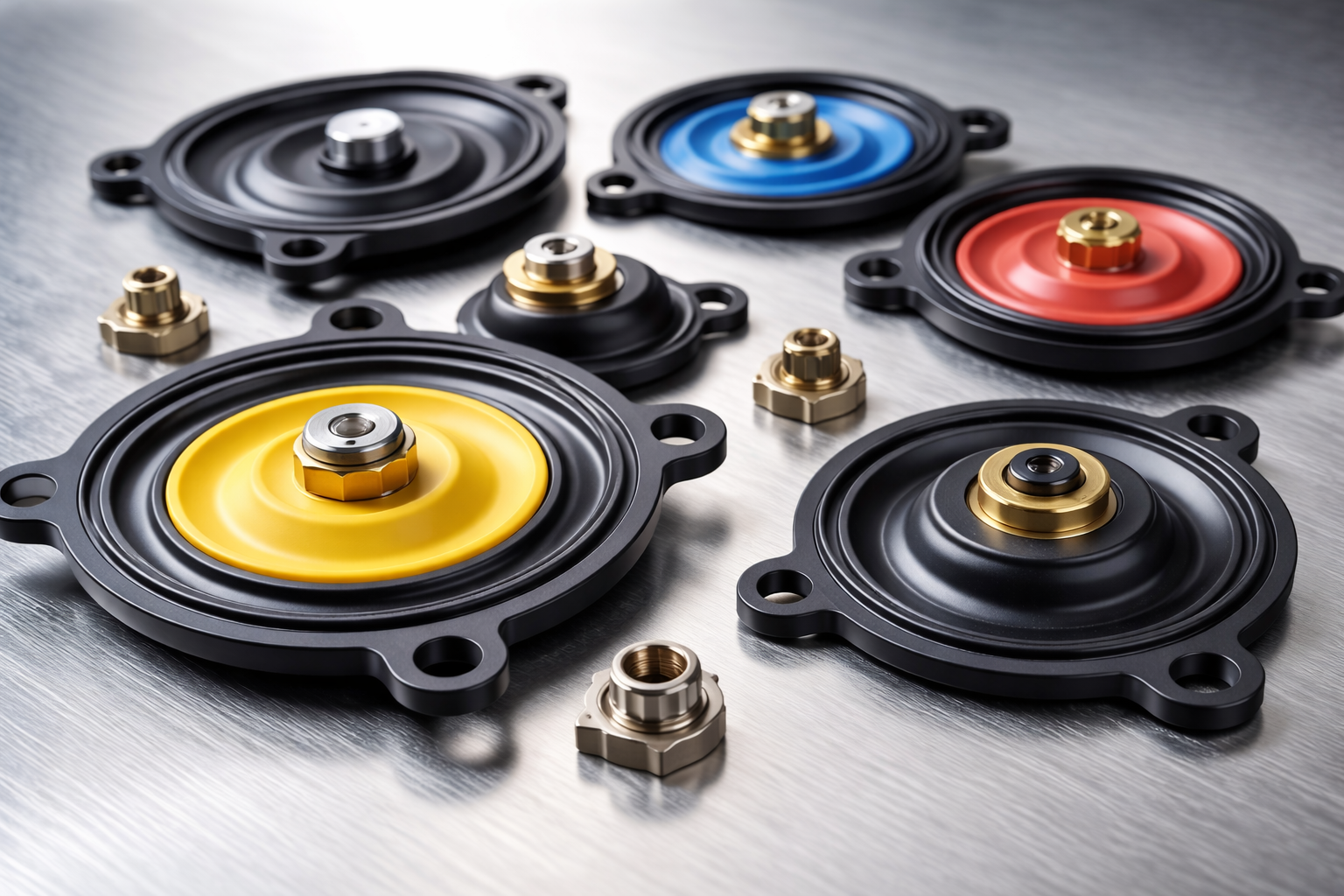
How Pressure Switch Diaphragm Design Affects System Accuracy and Longevity
It may be small, but the pressure switch diaphragm is the key to accurate, reliable performance for medical devices, automotive systems, industrial controls, and more. This flexible membrane detects pressure shifts and seals off fluids and/or gases to keep your system operating exactly as intended.
At Gulf Engineered Rubber and Plastics Solutions (Gulf), we design and manufacture custom-engineered pressure switch diaphragms that meet the most demanding OEM requirements. Our ISO-certified cleanroom manufacturing and molding capabilities ensure exceptional consistency, repeatability, and longevity across every component produced.
The Role of the Diaphragm in Pressure Switch Systems
The diaphragm serves two essential functions in pressure switch assembly: pressure transmission and sealing. As pressure changes in the system, the diaphragm will deflect, triggering a mechanical or electrical response that controls switch actuation.
Performance metrics of a pressure switch diaphragm include actuation pressure, response time, hysteresis, and repeatability. These metrics directly determine whether a switch responds accurately or fails prematurely. Poor diaphragm design can lead to false triggering, drift, or increased maintenance. While precise engineering ensures stable, predictable performance over millions of cycles.
Design Variables That Influence Accuracy
Pressure switch accuracy and reliability begins with material selection. Factors like modulus, elasticity, temperature range, and chemical resistance dictate how well a diaphragm maintains its mechanical response across operating conditions.
Geometry and thickness also matter. A thinner diaphragm can deliver at a higher sensitivity while controlled shape and thickness uniformity ensure consistent deflection behavior. Pre-stress and assembly tolerances affect calibration, while seal and boundary conditions, whether fixed or clamped, influence stiffness and repeatability.
At Gulf, we understand that precision molding is vital. Our acute control in liquid silicone rubber (LSR) and elastomer molding minimizes variability, delivering components that perform consistently from part to part.
Design Variables That Influence Longevity
Life expectancy of a diaphragm depends on how it resists fatigue and environmental degradation. Over time, each deflection cycle introduces stress that can weaken materials and reduce accuracy.
By selecting durable elastomers and optimizing design geometry, engineers can extend cycle life and minimize stress concentrations. Environmental exposure like extreme temperatures, corrosive media, or ozone can also impact performance. Gulf’s material engineers help OEMs match the right compounds to the environments to ensure lasting reliability.
Proper assembly practices will further enhance longevity by avoiding edge stresses or over-torquing during installation, which are common causes of early failure in the field.
Balancing Accuracy and Longevity: Trade-Offs and Best Practices
While thinner diaphragms provide greater sensitivity, they can lower fatigue resistance. The key is to balance both. Through finite element analysis (FEA), precision molding, and controlled testing, Gulf engineers optimize diaphragm geometry and material properties for each application.
To ensure the diaphragm meets both the accuracy and life cycle expectations of demanding OEM environments, we combine data-driven modeling with hands-on testing. Our engineering process often involves iterative prototyping and validation to fine-tune diaphragm response under simulated field conditions.
Quality, Testing and Validation in Diaphragm Design
Every Gulf diaphragm undergoes strict ISO-compliant testing. Our validation includes burst and cycle-life testing, hysteresis measurement, and environmental exposure under real-world conditions. With detailed traceability and data monitoring, we ensure product consistency and early detection of drift over time.
Applications
Gulf’s pressure switch diaphragms are used wherever precision and durability are essential – in medical devices, automotive systems, industrial controls, HVAC, and fluid-handling equipment. From high throughput industrial systems to rugged outdoor equipment, our diaphragms maintain tight sealing and reliable switch actuation.
Engineering Confidence Through Precision and Partnership
For OEM engineers, diaphragm design defines both system accuracy and durability. Investing in the right materials, geometry, and testing upfront will prevent issues and costly field failures. As a global leader in custom-engineered elastomer and LSR components, we partner with OEMs to develop innovative and reliable pressure switch diaphragm solutions for performance that lasts.
Contact our team of expert designers and precision engineers to discuss your project. We will leverage emerging technologies, help you select the right materials, and develop a cutting edge pressure switch diaphragm that meets your complex and unique needs.